Five Crews. 5,103 Fallen Trees. One Remarkable Season.
Despite heavy blowdown, wildfires, and an unpredictable summer, PNTA’s Performance Trail Crews delivered an extraordinary season of trail stewardship in 2026.
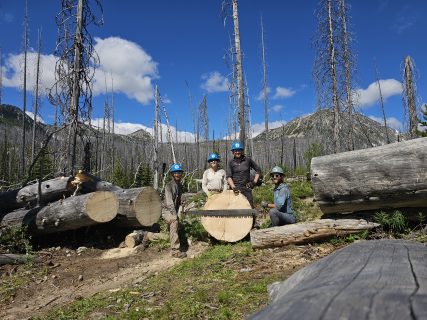
Some years, the trail throws a little more at us than others. In 2026, it threw a lot.
Thousands of fallen trees blocked trails across the region. Summer wildfires forced crews to abandon carefully planned projects and relocate to new work sites. Dangerous wind events and hazardous air quality brought additional disruptions.
But through it all, PNTA’s Performance Trail Crews kept working. And by the time the season ended in September, they had accomplished something extraordinary.
Five crews. Thirty-five work hitches. More than 220 miles of trail maintained. And an astonishing 5,103 fallen trees cleared — more than twice as many as the previous season.
These accomplishments are especially impressive considering that federal funding challenges meant operating with fewer crews than in previous seasons. Even with a smaller workforce, our experienced team made remarkable progress through an unusually demanding year.
Across a wide range of landscapes and challenging trail conditions, our crews tackled some of the toughest maintenance projects along the PNT, leaving trails in better condition for everyone who follows in their footsteps.
A Season of Extraordinary Challenges
Clearing more than 5,000 fallen trees in a single season would be impressive under almost any circumstances. But the sheer volume of blowdown our crews encountered in 2026 made for some truly remarkable projects.
On the Noisy Creek Trail, one crew cleared 600 fallen trees along a single mile of trail during an eight-day hitch. That’s an average of 75 trees cleared every day, often while working through tangled piles of timber and navigating difficult terrain.
On the Stickpin Trail, another crew removed 416 fallen trees during its first hitch alone.
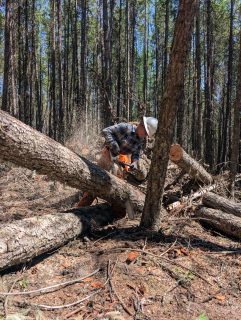
These weren’t isolated examples. Our crews working in the Kettle Range and surrounding mountains cleared more than 3,500 fallen trees, maintained approximately 110 miles of trail, and repaired 663 drainage structures.
The work was relentless, but the results were transformative. Trails that had become difficult to travel through dense blowdown were reopened, restoring access to places that might otherwise have remained obstructed for another season.
And clearing trees was only part of the job.
Our crews also rebuilt damaged trail structures, repaired tread, removed obstructing rocks, and cleared encroaching vegetation. Some projects required carefully reconstructing infrastructure that had deteriorated over years of exposure to the elements.
On the Cabin Trail, a crew repaired two puncheons during a single hitch, replacing rotting structural components and rebuilding railings to improve the durability and function of these elevated trail sections.
These projects may not produce the same eye-catching statistics as clearing hundreds of trees, but they’re every bit as important to the long-term condition of the trail.
When Plans Change, Crews Adapt
A successful field season takes months of planning. Crew assignments, project priorities, equipment, transportation, and backcountry logistics all have to come together before the first shovel hits the ground.
But even the best plans are no match for an unpredictable wildfire season.
Our Western Pasayten Crew made a strong start, clearing 313 fallen trees during its first two hitches. Then the Ptarmigan Fire forced a change of plans.
With smoke making conditions unsafe, the crew relocated to projects in the Mount Baker-Snoqualmie National Forest, where they continued clearing logs, brushing trails, and repairing tread.
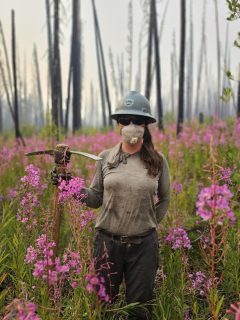
They weren’t alone in having to adjust.
Across the program, crews faced fire-related closures, evacuations during dangerous wind events, and work restrictions caused by hazardous air quality. Each disruption required our field staff to reassess conditions, adjust schedules, move equipment, and identify alternative projects where crews could continue making progress safely.
As one of our field leaders put it, the word for the season was pivot.
“We are forced to pivot to new locations due to fires, evacuate because of dangerous wind events and adjust our work tempo to reflect hazardous air quality conditions. Even though these moves make things more logistically and physically difficult, we continue to push forward and have remained successful.”
That flexibility was one of the season’s greatest accomplishments.
Rather than allowing disruptions to derail the summer, our crews adapted and kept making progress wherever conditions allowed. It took patience, teamwork, and a willingness to tackle unfamiliar assignments on short notice.
Those qualities don’t always show up in our season-end statistics, but they’re essential to the success of our trail operations program.
Different Trails, Different Challenges
No two assignments were quite alike. Each project brought its own challenges, from overgrown trail corridors and damaged tread to extraordinary concentrations of fallen timber.
On the Olympic Peninsula, our Olympic Crew maintained the PNT through Olympic National Forest from Discovery Bay to the Bogachiel River Trailhead. Their work included reclaiming overgrown trail corridors and repairing damaged tread on the Sleepy Hollow and Mount Zion Trails.
The North Cascades Crew worked all across Mount Baker-Snoqualmie National Forest and into North Cascades National Park, including places like Hannegan Pass, Park Butte, Swift Creek and Brush Creek Trails, clearing fallen trees, removing obstructing rocks, and cutting back vegetation. Their efforts helped keep some of the region’s most popular and scenic routes in good condition through the busy summer season.
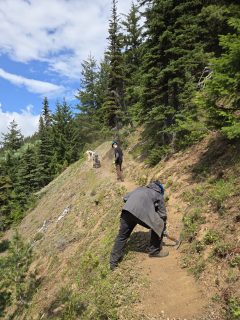
In the Pasayten Wilderness, crews worked through heavy blowdown before wildfire conditions redirected their efforts elsewhere.
And in the Kettle Range and surrounding mountains, our crews tackled some of the season’s most demanding log-clearing assignments, along with trail improvements near Abercrombie Mountain, the Kettle Crest, Salmo Basin, and the Shedroof Divide.
These crews worked in very different environments, but they shared the same mission: to leave the trails in better condition than they found them.
For many hikers, the results of that work are most noticeable in what they don’t encounter — a fallen tree blocking the trail, an impassable washout, or miles of overgrown vegetation.
Behind those improvements are weeks of demanding work, often far from the nearest road or trailhead.
The People Behind the Progress
It’s easy to get caught up in the numbers from a season like this one. But behind every cleared log, repaired trail, and completed project are the skilled, dedicated people who spend their summers caring for the PNT.
Our Performance Trail Crews do demanding work in some of the Northwest’s most remote landscapes. It takes physical endurance, technical expertise, sound judgment, and the ability to work together through long days and changing conditions.
That preparation begins before the crews head into the backcountry. In June, our western Washington crew members gathered near Baker Lake for saw training, working alongside experienced instructors from the Forest Service and Back Country Horsemen to sharpen their skills and renew their crosscut saw certifications. These specialized skills are especially important in designated wilderness, where traditional hand tools are essential to maintaining trails.
Read more about our 2026 saw training.
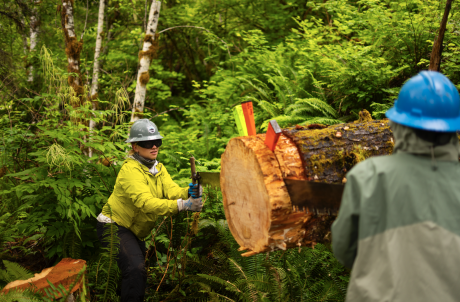
This year, we were fortunate to field one of our most experienced seasonal teams yet. Their expertise helped us make remarkable progress through an unusually challenging season, while creating opportunities for newer crew members to learn from experienced leaders.
One of those leaders, Ray Phillips, was recognized this fall with the Emerging Leader Award at the Washington State Trails Conference. A three-year member of PNTA’s Performance Crews, Ray was honored for their contributions to Washington’s trails and their commitment to fostering a supportive, inclusive environment for fellow crew members.
Ray’s leadership reflects something we value deeply in our trail operations program: the opportunity to develop not only skilled trail workers, but thoughtful, capable leaders who will carry their experience forward into future careers and continued service to public lands.
Earlier this season, Ray shared what motivates them to do this work:
“I feel so lucky everyday to wake up and work in an area of public land that many people aren’t able to visit,” Ray said. “It encourages me and my crew to continue fighting for public lands, and gives us hope even as there are budget cuts affecting access and funding to such places.”
Their words capture the sense of purpose that brings many of our crew members back season after season. The work is physically demanding, the days can be long, and plans don’t always go as expected. But the opportunity to care for extraordinary places, build lasting friendships, and see the results of a hard day’s work makes the experience uniquely rewarding.
We’re proud of what our crews accomplished on the trail this year. We’re just as proud of the people they’re becoming along the way.
Building on the Successes of 2026
As our crews hang up their hard hats and put away their tools for the season, the work of preparing for 2027 is already underway.
Our headquarters team is working to secure the funding, partnerships, and resources needed to build on this year’s accomplishments and put skilled crews back on the trail next summer.
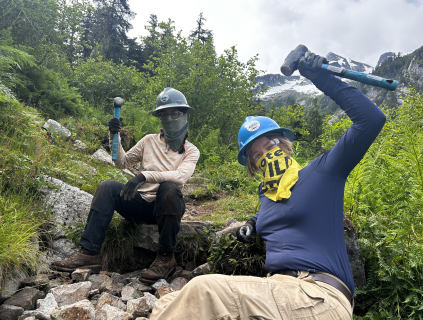
You can help make that possible. Your support helps PNTA equip, train, and deploy the trail crews who keep the PNT open and accessible.
Support Our Trail Crews in 2027
And if you’d rather be part of the crew yourself, we’re always looking for people who are ready to work hard, learn new skills, and spend a summer making a difference on the trail.
Explore Seasonal Employment Opportunities
To every member of our 2026 Performance Trail Crews: thank you for an extraordinary season. We’re proud of what you’ve accomplished and grateful for the dedication, skill, and teamwork you brought to the PNT.