
Western Michigan Academy of Environmental Sciences Volunteers With PNTA
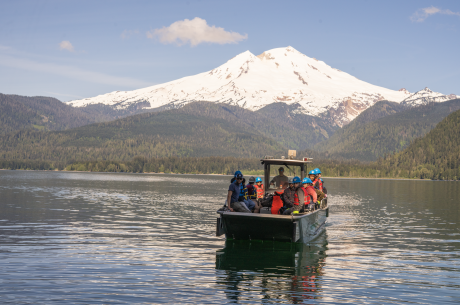
Earlier this month, 14 high school students and 3 chaperones from the Western Michigan Academy of Environmental Sciences (WMAES) flew halfway across the country to join the Pacific Northwest Trail Association for a week of hands-on trail stewardship.
“We’ve had the opportunity to bring students out into nature and give them one of the best hands-on experiences that could ever be supplied,” said Joseph Figurski, an environmental science teacher at WMAES. “We’re not only giving students the opportunity to go out and do impactful work with their hands, getting dirty; we’re giving them the opportunity to improvise and adapt and overcome any situation that might get thrown at them that they normally don’t experience — like what they’re going to do with their stuff if it rains or how to work as a team to maintain the trail. Experiences like these give them the endurance and skillset to persevere in so many other places after this trip.”
On May 10th, the students piled into a red jeep and a van and sat shoulder to shoulder as they peered out at the white cap of Mount Baker as it appeared from behind douglas firs and cedars double the size of the trees from back home. Seher Khan, PNTA Volunteer Coordinator, led the way in her white truck, followed closely behind by Connor Clifford, PNTA Technical Advisor. They formed a small tent village at Swift Creek Campground; the only sounds soon became the wind through the evergreen needles, the occasional irritable squirrel and the glacial river below.
After a spaghetti dinner made on a camp stove and night under the stars, the students woke up early the next morning to catch a boat across Baker Lake to begin a day of trail maintenance.
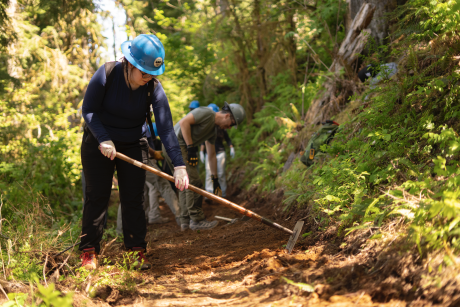 “This is my second year,” said Jesus Ramirez, a student at WMAES, “I was blown away during my first year when I realized the trails didn’t magically look like that. The idea that I had in my head was that trails look so nice just because a lot of people walked over them. I didn’t think they were actually big teams that went out and did trail maintenance and put so much work into it.”
With loppers and McLeods in hand, the students learned how to snip brush away from the eight foot corridor around the trail and how to shape the tread to make a lasting footpath for future hikers. Under the shadow of old growth firs, the students formed new callouses maintaining the Swift Creek Trail. They split into groups of three or four, leaving a neat trail behind them of freshly cleared vegetation and manicured soil — reestablishing the winding footpath we all know and love (and so often take for granted.) Seher and Connor routinely gave advice to the students on form or technique as they learned how to use the different tools on trail. At lunch, you could find the students sitting on logs and moss clumps on the side of the trail, admiring their progress and joking about which group worked harder.
“On the work days, I may be sweaty and grimy afterwards, but I like seeing another version of myself come out when we come here.” Yaiza Alaya, another student at WMAES said, “After doing our trail work, on the walk back we always see what we’ve done. Knowing that I’ve made an impact, even if it was small, is really important to me.”
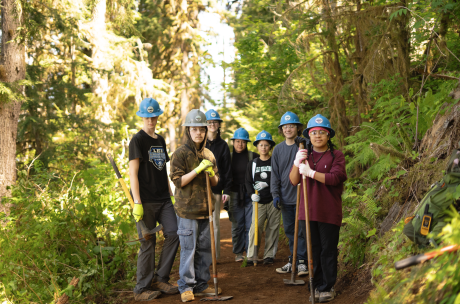
At the end of the day, the students walked back through the tread they had maintained with muddy tools in hand and lunch bags empty. After the boat ride, they settled into camp and still had time to sit by the lake and enjoy the scenery of the Pacific Northwest. Perhaps they looked up at the mountains with a different admiration now. With arms tired from swinging weed whips and feet sore from hiking, the views of the PNT winding away into the thick evergreens seemed a little closer to home. Now the students realized the amount of work that went into maintaining accessibility to these wild places, and after seeing how beautiful they can be — knew why it was so important to protect them. On this week-long work trip, the students were a part of preserving a footpath that had existed since before they were born. Even as their callouses fade, their budding love for our country’s trails and wild spaces will last a lifetime.