When Fire Changes the Plan
Wildfire has always shaped the landscapes of the Pacific Northwest Trail. Increasingly, it also shapes the work required to keep the trail open and maintained.
This summer, fires, smoke, evacuations, and changing restrictions have repeatedly forced PNTA Performance Trail Crews to change where—and sometimes how—they work. It is a challenge that has become increasingly familiar in recent years. Fire can disrupt a season’s plans in a matter of hours, while its effects on the trail can create years of work after the flames are gone.
 Still, the work moves forward.
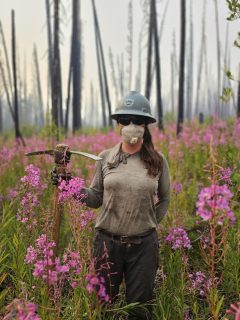
So far this season, PNTA crews have cleared more than 4,000 logs from the Pacific Northwest Trail, while maintaining tread and completing other essential trail work.
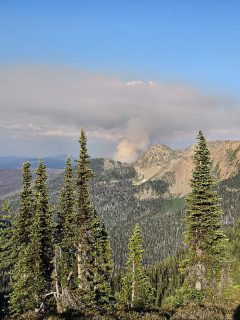
In the Pasayten Wilderness, a PNTA crew cleared 110 logs during its fourth hitch before worsening conditions from the Ptarmigan Fire forced an evacuation. The change came quickly. The pack stock that had carried the crew’s equipment into the backcountry wasn’t available to return on such short notice, forcing the crew to leave some important gear behind.
The equipment was stashed with the hope that it could be retrieved when conditions allowed. Instead, the fire eventually burned through the area where it had to be left, and the equipment was lost.
The crew, meanwhile, shifted west and continued working near Mount Baker.
“Crews have been great at rolling with the challenges this year’s fires have thrown their way,” said Western Regional Manager Sterling Collins-Hill.
That same flexibility has been required farther east.
For Eastern Regional Manager Gregg Bafundo, one word has defined the season: pivot.
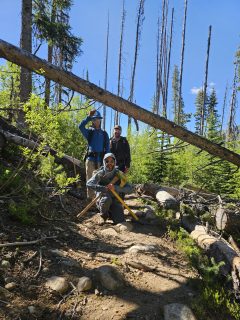
“My word for this season for myself and the trail crews is ‘pivot.’ We are forced to pivot to new locations due to fires, evacuate because of dangerous wind events, and adjust our work tempo to reflect hazardous air quality conditions. Even though these moves make things more logistically and physically difficult, we continue to push forward and have remained successful.”
For the final hitches of the season, eastern crews will make another adjustment: putting away their chainsaws and relying entirely on crosscut saws where fire danger makes the risk of using a chainsaw too great.
Together, these accomplishments tell a larger story about what it takes to maintain a long-distance trail across the Northwest today.
Fire affects trail work in two ways. During an active fire, closures, smoke, evacuations, and restrictions can quickly make carefully planned projects impossible. As the Pasayten evacuation demonstrated this summer, rapidly changing conditions can carry real costs even when crews and projects successfully adapt.
Afterward, burned landscapes bring a different challenge. Fire-killed and weakened trees can continue falling across trails for years, while erosion and damaged tread create additional maintenance needs.
As more of the PNT is affected by wildfire, responding to those conditions is becoming less of an exception to PNTA’s work and more of a focus of the work itself.
 That requires crews that can move where they’re needed, staff who can reorganize projects as conditions change, and the skills and equipment to work effectively under different restrictions. Sometimes it means moving a crew hundreds of miles. Sometimes it means trading a chainsaw for a crosscut. And sometimes it means returning to a burned landscape year after year as new trees come down.
This summer offers a snapshot of that changing reality—and of what PNTA crews can accomplish within it.
More than 4,000 logs cleared. Entire projects relocated as conditions changed. Crews continuing to make progress across the trail despite a fire season that repeatedly changed the plan.
Wildfire will continue to change the landscape of the Pacific Northwest Trail. We’re here to make sure the trail is still there on the other side.